Washington, Idaho journalists ratify new union contract after strike
THE PACIFIC NORTHWEST — Unions representing workers at five Pacific Northwest newspapers have ratified a new three-year contract with McClatchy Media, securing guaranteed raises and some of the strongest protections against artificial intelligence in the news industry.
The two contracts cover journalists at the Idaho Statesman, Tacoma News Tribune, Tri-City Herald, Bellingham Herald and The Olympian. Workers at those five papers conducted a one-day strike in May on their way to winning the following victories for workers:
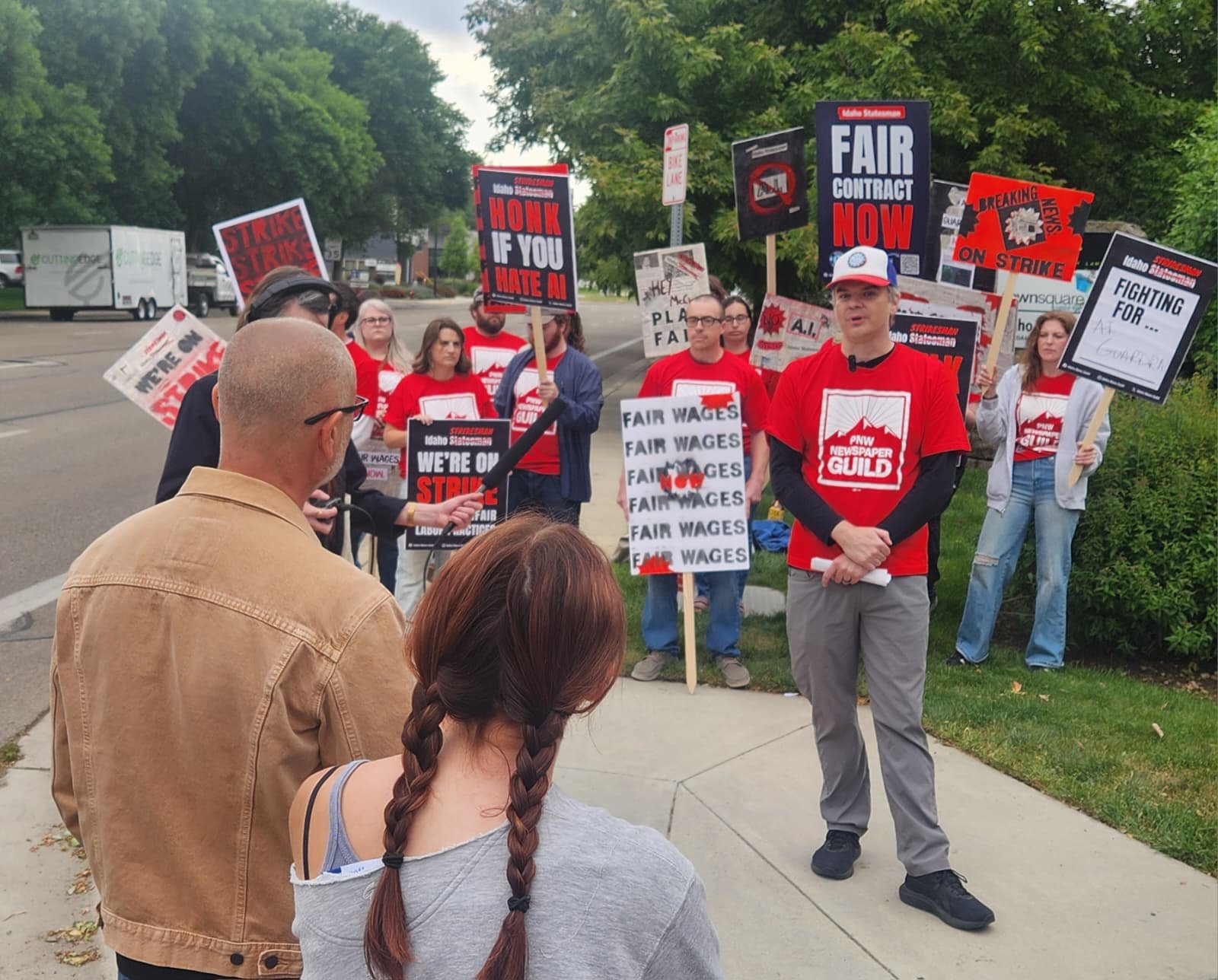
Guaranteed raises of 7.2% to 15.5% over the next three years, including immediate raises of 3% to 11.1%
$52,000 minimum salary for current employees
Ban on AI replacing staff, decreasing pay or reducing working hours
AI cannot do union members’ work without our direct control
Ban on mandatory production quotas in performance reviews
Minimum annual training budget ($4,000 in Idaho, $7,500 in Washington)
Improved just cause and discipline protections
The ratification follows more than a year of negotiations for a second contract with McClatchy, a hedge-fund owned national media company. Two bargaining units — the Washington State NewsGuild and the Idaho News Guild — worked together to improve working conditions and wages for their 52 members across two states.
“Solidarity works,” said Washington State NewsGuild secretary Eric Rosane, a civic accountability reporter at the Tri-City Herald. “By working together and leveraging our collective power, we made a raft of improvements that will make an immediate impact on our members’ lives.”
The unions secured additional AI protections that ensure journalists retain oversight of the emerging technology. Nothing generated by AI can be published without human review, and no member can be forced to rely on AI as a source of factual information.
The contract also requires McClatchy to disclose AI use to its readers and prevents the company from impersonating journalists or disciplining members for a chatbot’s mistakes.
We invite the public to review the full AI article here.
McClatchy’s obsession with AI has led to a series of sloppy mistakes and made our jobs more difficult by damaging our credibility in our communities. For example, it falsely published that a Boise brewery closed when it hadn’t, and it informed Washington readers of sales at businesses that were no longer open — all without reporter input or review.
The AI fight escalated this spring when McClatchy tried to force journalists to put their names on AI rewrites of their original work. Union members in Washington and Idaho refused, joining colleagues at the Sacramento Bee and Miami Herald in a byline strike. McClatchy’s hostile rollout even created a new union at the Centre Daily Times in State College, Pennsylvania.
“Readers can trust that we will hold our corporate owners accountable,” said Idaho News Guild chair Michael Lycklama, a sports reporter for the Idaho Statesman. “We fought long and hard for these protections. We plan to use them to ensure our communities get the news they deserve, not more AI slop.”
Additional worker victories include first consideration for the hiring of open roles, increased pay for interns and late-night work, and a requirement that all employees are considered for merit raises every year. Any employee who doesn’t receive a merit raise must be told why verbally and in writing.
A full copy of the contract will be posted to the Pacific Northwest Newspapers Guild website soon, where the public can continue to follow our fight to save local news.
Local reporters are available in Washington and Idaho markets for interviews. Request an interview by emailing pnwnewsguildmcc@gmail.com.
Reporters pledge to strike against McClatchy Media
We’re ready to strike.
An overwhelming 90% of union members at the Idaho Statesman, The Tacoma News Tribune, Tri-City Herald, The Olympian and Bellingham Herald have signed a pledge to go on strike against McClatchy Media.
Owned by a New Jersey hedge fund, McClatchy Media operates newspapers in 30 markets with 65 million monthly readers and boasts more than 50 Pulitzer Prizes. The company has spent recent years buying up unproven AI technology and celebrity tabloids instead of investing in its newsrooms. Now it claims it can’t afford to pay employees a stable income.
Our strike pledge comes after 11 months of grueling bargaining in which McClatchy has steadfastly refused to raise the wage floor above $52,000 for current employees. Company leaders have demanded journalists write 20% more stories and produce 50% more videos this year, while only offering 2% yearly raises — well below inflation.
But our fight is not just for our own financial well-being. We are fighting for the future of local journalism.
To have experienced eyes and ears in your community, you need journalists who can stick around and build a life instead of bouncing from job to job. Nobody expects to get rich in this line of work, but it should not be out of reach to have a family, to dream of buying a home or to save for retirement. A sudden car repair or an unforeseen medical bill should not be a crisis.
We have long sought to fight for our communities by highlighting overlooked issues, holding politicians and businesses accountable and giving voice to those who need it. Every day we hear from people asking us to shine a light on untold stories or investigate corruption.
Now, it’s our turn to ask for your help. To go on strike, we need to find a way to keep making rent and paying bills. Please consider donating to our strike fund on GoFundMe. The more money we raise, the longer we can fight.
Let’s fight together for a sustainable future for local news.
Find our GoFundMe at: bit.ly/pnwnewsstrike
Local reporters are available in Washington and Idaho markets for interviews. Request an interview by emailing pnwnewsguildmcc@gmail.com. You can find more information on our website at idwanewsguilds.org. All statements can be attributed to: The Idaho and Washington State News Guilds
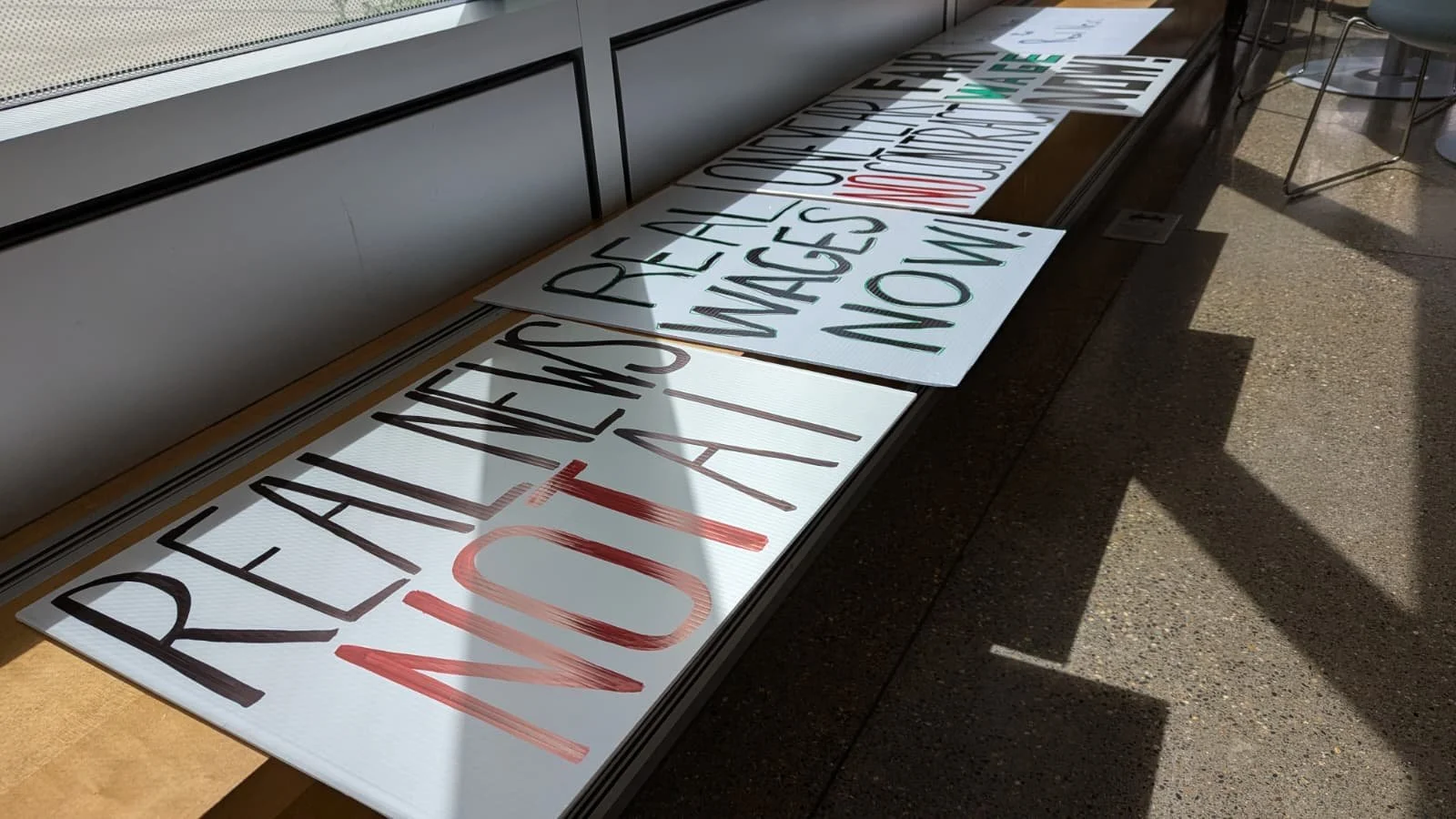
'I thought we'd make a living:' McClatchy reporters speak out about low wages
Union members at McClatchy newspapers speak out about how the company’s low wages affect their lives.
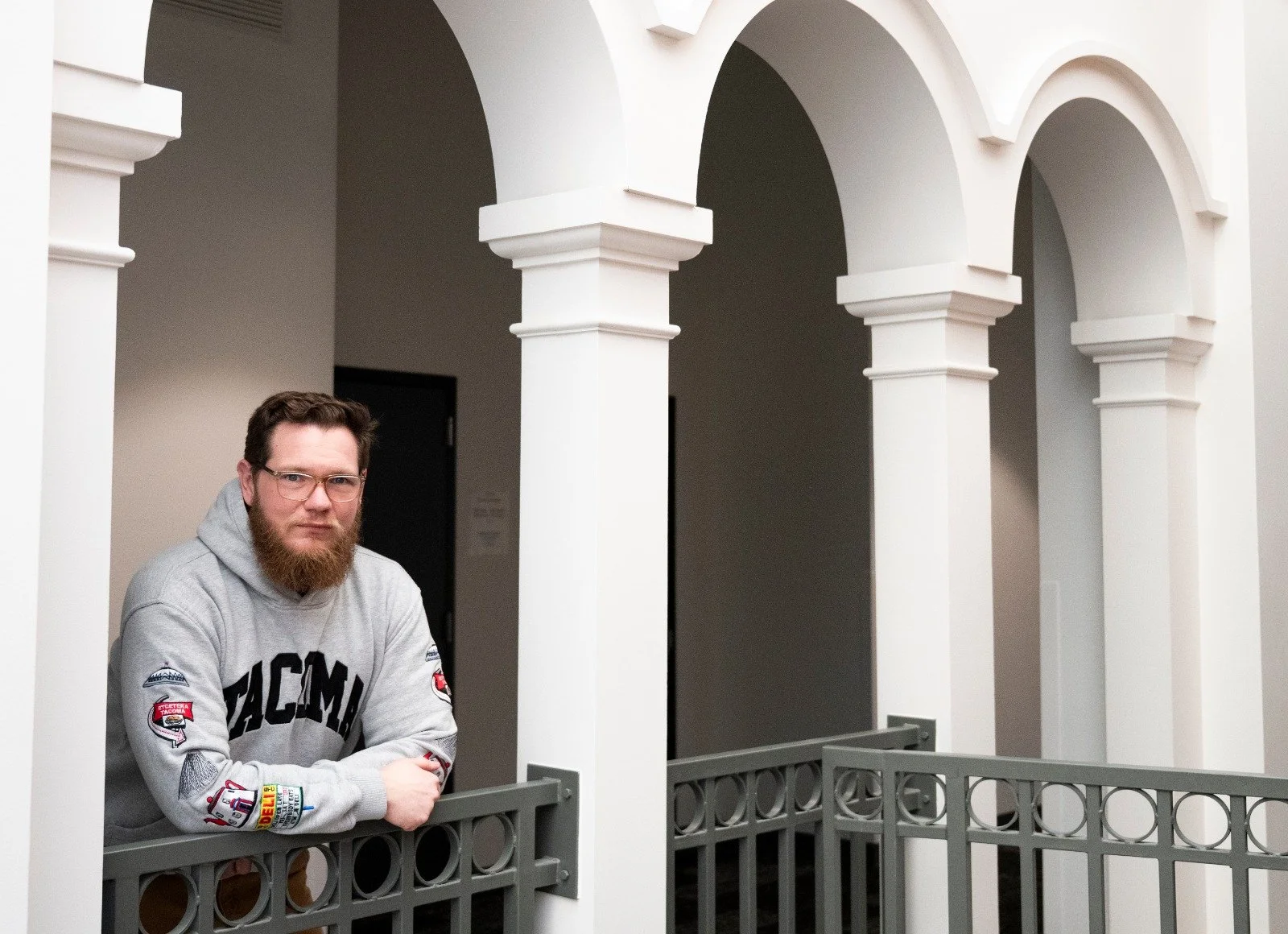
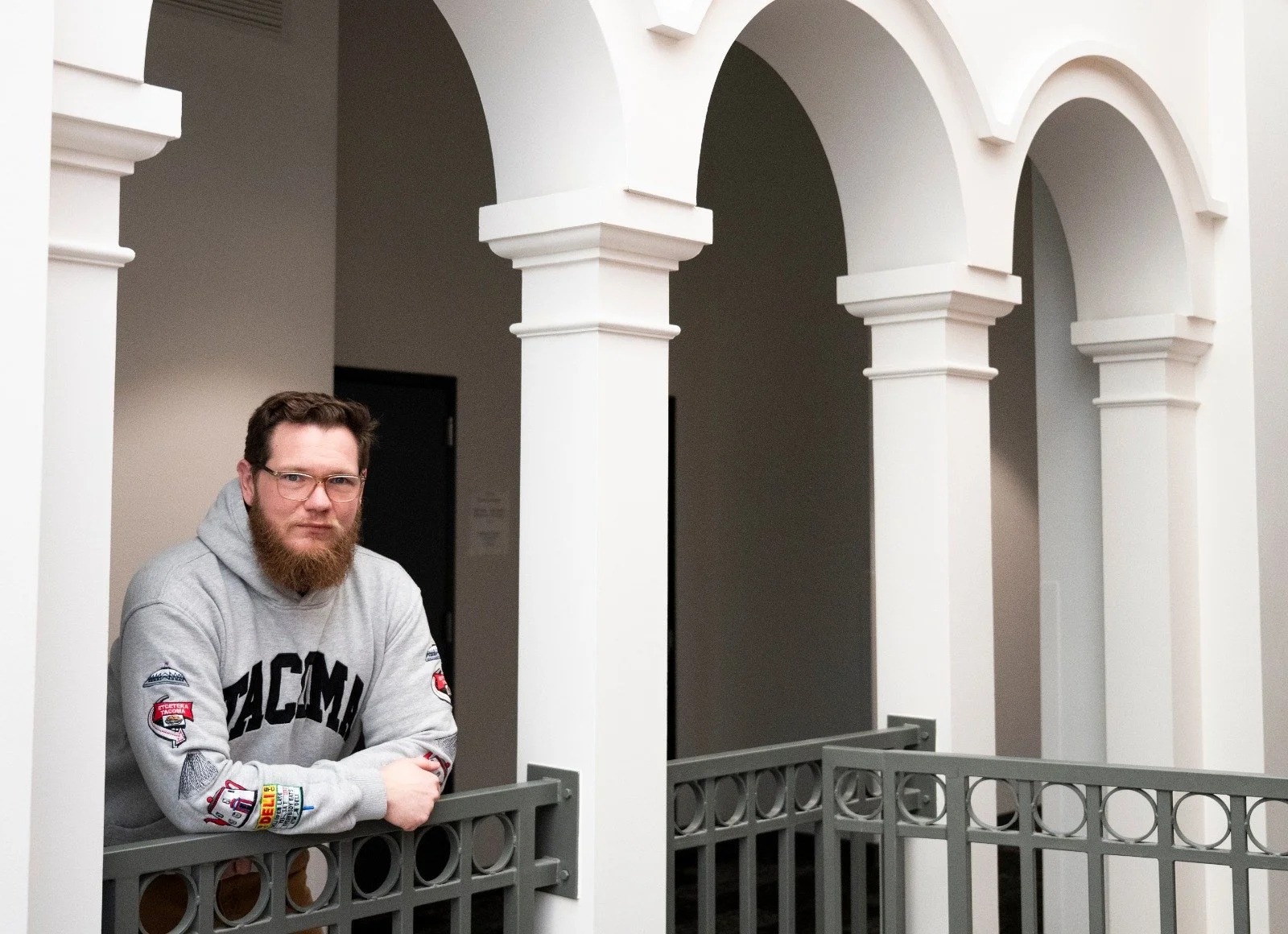
Brian Hayes, pictured at The News Tribune's office, has worked as an award-winning photojournalist for the last decade.
By Becca Most
After receiving an unexpected $600 dental bill in August, Tacoma News Tribune reporter Izzie Lund, 26, didn't leave her home for three weeks because she couldn't afford to put gas in the tank. Despite working full-time, Lund lives paycheck to paycheck, and any unexpected bill can wipe out her bank account.
"I was just trapped in my apartment," Lund said. "There have been times — like two or three days before my next paycheck — when I'll just be foraging through my cupboards, looking for anything to eat."
She's not alone. More than 75% of current McClatchy journalists in Idaho and Washington make less than their area’s stable household income as determined by United Way, the charitable organization on whose boards McClatchy CEO Tony Hunter has long served.
The Washington State News Guild and Idaho News Guild unions — which represent journalists at The Tacoma News Tribune, The Olympian, The Bellingham Herald, The Idaho Statesman and The Tri-City Herald — have been trying to negotiate higher wages with McClatchy.
But after more than ten months of contract negotiations, McClatchy Media still refuses to offer its employees a wage floor above $48,000 or an annual raise above 2%. This comes as company leaders told journalists earlier this year that they would be expected to write 20% more stories and produce 50% more videos in 2026.
Journalists can't afford the American Dream
The cost of providing engaging local news is weighing on reporters. Many union members report having to delay or give up their life goals to continue working as McClatchy journalists.
Six-year Olympian reporter Martín Bilbao, 28, said he’s found his budget getting “increasingly more in the red” every year and has delayed his wedding “because of money concerns.”
Brian Hayes, 37, works as a visuals journalist for The News Tribune and The Olympian, covering a region of about 1.3 million people. Although Hayes has been an award-winning photojournalist for 10 years, he said saving enough for a home feels impossible on his income. He's watched colleagues leave the industry to be able to buy a place of their own.
"I don't think any of us got into [journalism] to be rich, but I thought we'd make a living," Hayes said. "It just feels like quicksand. You're making enough to be here, but you're slowly sinking. You're not able to save. You're not able to pay off your student loans, or even make payments on those. You're here until it's no longer financially feasible."
Over the years McClatchy newspapers in Idaho and Washington have raised subscription prices while slashing overhead by keeping wages perpetually low.
Hedge funds — like the New Jersey hedge fund Chatham Asset Management that bought McClatchy in 2020 — are buying up newspapers around the country with the goal of maximizing shareholder profits, said investigative journalist and scholar Margot Susca in her book, “Hedged: How Private Investment Funds Helped Destroy American Newspapers and Undermine Democracy.”
Many local newspapers have been “reduced to zombie versions of their former selves as the new owners have shaved them down to minimize costs, depriving readers of the comprehensive coverage they enjoyed in the golden age of newspapers,” wrote Politico’s Jack Shafer in an interview with Susca in 2024.
Low wages have led to high staff turnover and a loss of institutional knowledge at McClatchy papers.
“Uncovering corruption requires a level of trust with sources that takes years to build,” said 33-year-old Idaho Statesman reporter Sally Krutzig. “When you’ve seen as much turnover as our newspaper has, it’s hard not to wonder what we could be missing.”
Izzie Lund is the East Pierce County reporter at The News Tribune.
Journalist responsibility increasing, despite low pay
Debbie Cockrell, 58, who has worked for McClatchy since 2004, said she has never seen the staff under so much pressure to produce more content at such a fast pace.
"The pressure's always been there to work quickly, but I feel like it's getting more so," she said. "You basically just have to be an instant expert [on everything]."
Cockrell said she's noticed a pattern at McClatchy. New hires tend to be paid more because the company can't fill the job without offering higher wages. Staff who have been there longer seem to get financially stuck and don't get enough of a raise to even match new hires, she said.
All six staff members who spoke with the Washington State News Guild and Idaho News Guild last month said they struggle to make ends meet, despite being asked to do more work than they had initially agreed to upon hire.
Hayes said the public doesn't realize some of the horrible things journalists see. He's seen dead bodies when covering crime and breaking news stories. He has sat in courtrooms, listening to the gory details of murders and sex crimes against children. He's had to build empathy and trust with victims and families whose lives have been torn apart, and then package that into a 90-second video.
"Every day it's a challenge: emotionally, technically, physically and it's rewarding," Hayes said. "We see everything, so you guys don't have to. I see terrible, horrible aspects of life and beautiful, wonderful aspects of life. And it's all part of the story that is Tacoma. And we do it because we love it, but it'd be nice to make a living wage."
How to help
Please let McClatchy executives know that employees deserve fair wages. You can support union members by filling out the email form at:
https://actionnetwork.org/letters/5191b374b67c1df91ce321de17dd1acc679998db
McClatchy prices out experienced reporters
McClatchy Media is pricing experienced reporters out of the local news industry at a time when communities deserve reliable information more than ever.
THE PACIFIC NORTHWEST — McClatchy Media is pricing experienced reporters out of the local news industry at a time when communities deserve reliable information more than ever. The union members at the Idaho Statesman, The Tacoma News Tribune, Tri-City Herald, The Olympian and Bellingham Herald are fighting to protect local journalism from an out-of-state corporation.
Owned by a New Jersey hedge fund, McClatchy Media operates newspapers in 30 markets with 65 million monthly readers and boasts more than 50 Pulitzer Prizes. But behind the company’s success are struggling employees.
Local reporters used to be able to buy a home, raise a family and save for retirement on their wages. Today, McClatchy reporters are struggling with the realization they must either give up those dreams or quit.
It’s become a vicious cycle: McClatchy hires reporters, the reporters gain experience, McClatchy refuses to recognize their skills and they reluctantly move on to higher-paying jobs.
Journalists aren’t the only ones who suffer. Building trust with sources takes years. Rapid turnover means that when officials hide corruption, we don’t have reporters with the community connections to uncover the truth.
After more than eight months of contract negotiations, McClatchy still refuses to offer a wage floor above $48,000. More than 75% of current McClatchy journalists in Idaho and Washington make less than their area’s stable household wages determined by the United Way — the charitable organization on whose boards our CEO Tony Hunter has long served.
For most, there’s little chance of significant wage increases, no matter how many years worked, stories broken or awards won. Company leaders have demanded journalists write 20% more stories and produce 50% more videos this year, but only offered a 2% yearly raise. All while inflation has eroded almost 10% of our wages in the past three years.
Meanwhile, McClatchy corporate offices are on a spending spree, spending millions to acquire a chain of tabloids and an AI company.
“There’s always enough money for the latest shiny toy for McClatchy’s out-of-state executives,” said Michael Lycklama, chair of the Idaho News Guild. “Yet McClatchy cries poverty when it comes time to invest in newsrooms and the communities that rely on them.”
Local reporters are available in Washington and Idaho markets for interviews. Request an interview by emailing pnwnewsguildmcc@gmail.com.
All statements can be attributed to: The Idaho and Washington State News Guilds
McClatchy abandons common sense on AI
What happens when a respected media company like McClatchy is willing to abandon its journalistic ethics to jump on the AI bandwagon?
THE PACIFIC NORTHWEST — Companies everywhere are rushing to join the AI bandwagon. But what happens when a respected media company is willing to abandon its journalism ethics along the way?
We, the union members of the Idaho Statesman, The Olympian, The Tacoma News Tribune, Tri-City Herald and Bellingham Herald, refuse to remain silent any longer about the unethical AI practices and plans of our employer, McClatchy Media. After more than six months of contract negotiations, McClatchy still refuses to agree to proposed common-sense AI protections.
McClatchy is pushing to set a new, dystopian standard for local news.
The company insists that it should have the ability to:
Publish AI news stories and images without clearly labeling them as AI.
Publish AI articles that weren’t reviewed by a human.
Create AI impersonations of reporters for podcasts and videos without their consent — even if they quit or die.
Publish deepfake images.
Force reporters to use AI in their reporting.
Publish AI content that breaks the company’s own ethical standards.
McClatchy Media operates newspapers in 30 markets with 65 million monthly readers and boasts more than 50 Pulitzer Prizes. Other McClatchy newsrooms facing a similar lack of AI protections include the Miami Herald, Kansas City Star, Sacramento Bee and Fort Worth Star-Telegram.
We’ve already begun to see the failings of the company’s AI push, from misinformation to outright errors. In one instance, an AI-generated article in the Idaho Statesman falsely stated that a brewery had closed. It wasn’t fixed until a reader contacted an editor.
“We are living in a time when it is more important than ever for people to have factual media sources they trust,” Eric Rosane, Tri-City Herald civic accountability reporter and Washington State NewsGuild Secretary, said. “McClatchy is trying to give that trust away and hopes no one will notice – or worse, care.”