'I thought we'd make a living:' McClatchy reporters speak out about low wages
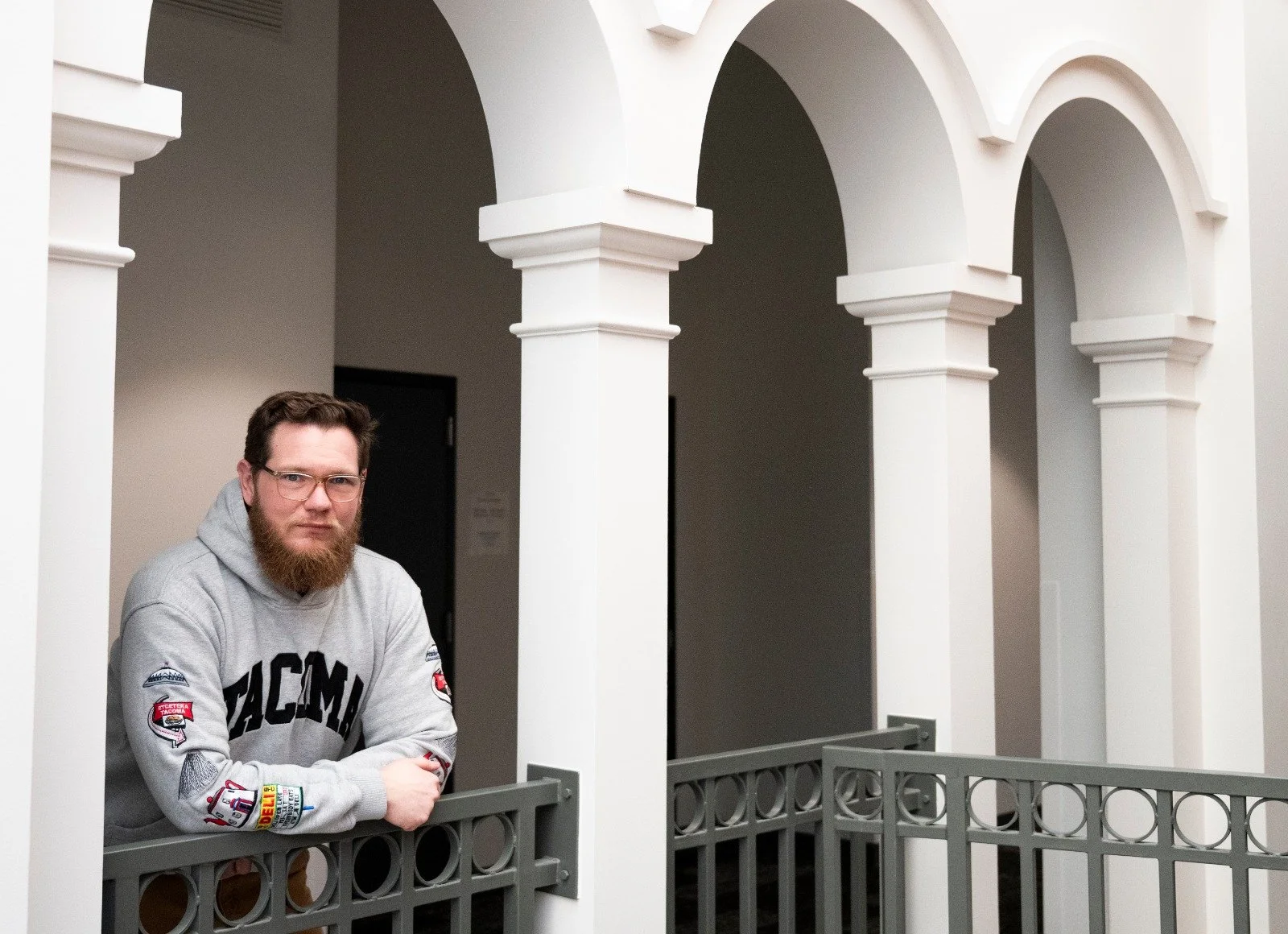
Brian Hayes, pictured at The News Tribune's office, has worked as an award-winning photojournalist for the last decade.
By Becca Most
After receiving an unexpected $600 dental bill in August, Tacoma News Tribune reporter Izzie Lund, 26, didn't leave her home for three weeks because she couldn't afford to put gas in the tank. Despite working full-time, Lund lives paycheck to paycheck, and any unexpected bill can wipe out her bank account.
"I was just trapped in my apartment," Lund said. "There have been times — like two or three days before my next paycheck — when I'll just be foraging through my cupboards, looking for anything to eat."
She's not alone. More than 75% of current McClatchy journalists in Idaho and Washington make less than their area’s stable household income as determined by United Way, the charitable organization on whose boards McClatchy CEO Tony Hunter has long served.
The Washington State News Guild and Idaho News Guild unions — which represent journalists at The Tacoma News Tribune, The Olympian, The Bellingham Herald, The Idaho Statesman and The Tri-City Herald — have been trying to negotiate higher wages with McClatchy.
But after more than ten months of contract negotiations, McClatchy Media still refuses to offer its employees a wage floor above $48,000 or an annual raise above 2%. This comes as company leaders told journalists earlier this year that they would be expected to write 20% more stories and produce 50% more videos in 2026.
Journalists can't afford the American Dream
The cost of providing engaging local news is weighing on reporters. Many union members report having to delay or give up their life goals to continue working as McClatchy journalists.
Six-year Olympian reporter Martín Bilbao, 28, said he’s found his budget getting “increasingly more in the red” every year and has delayed his wedding “because of money concerns.”
Brian Hayes, 37, works as a visuals journalist for The News Tribune and The Olympian, covering a region of about 1.3 million people. Although Hayes has been an award-winning photojournalist for 10 years, he said saving enough for a home feels impossible on his income. He's watched colleagues leave the industry to be able to buy a place of their own.
"I don't think any of us got into [journalism] to be rich, but I thought we'd make a living," Hayes said. "It just feels like quicksand. You're making enough to be here, but you're slowly sinking. You're not able to save. You're not able to pay off your student loans, or even make payments on those. You're here until it's no longer financially feasible."
Over the years McClatchy newspapers in Idaho and Washington have raised subscription prices while slashing overhead by keeping wages perpetually low.
Hedge funds — like the New Jersey hedge fund Chatham Asset Management that bought McClatchy in 2020 — are buying up newspapers around the country with the goal of maximizing shareholder profits, said investigative journalist and scholar Margot Susca in her book, “Hedged: How Private Investment Funds Helped Destroy American Newspapers and Undermine Democracy.”
Many local newspapers have been “reduced to zombie versions of their former selves as the new owners have shaved them down to minimize costs, depriving readers of the comprehensive coverage they enjoyed in the golden age of newspapers,” wrote Politico’s Jack Shafer in an interview with Susca in 2024.
Low wages have led to high staff turnover and a loss of institutional knowledge at McClatchy papers.
“Uncovering corruption requires a level of trust with sources that takes years to build,” said 33-year-old Idaho Statesman reporter Sally Krutzig. “When you’ve seen as much turnover as our newspaper has, it’s hard not to wonder what we could be missing.”
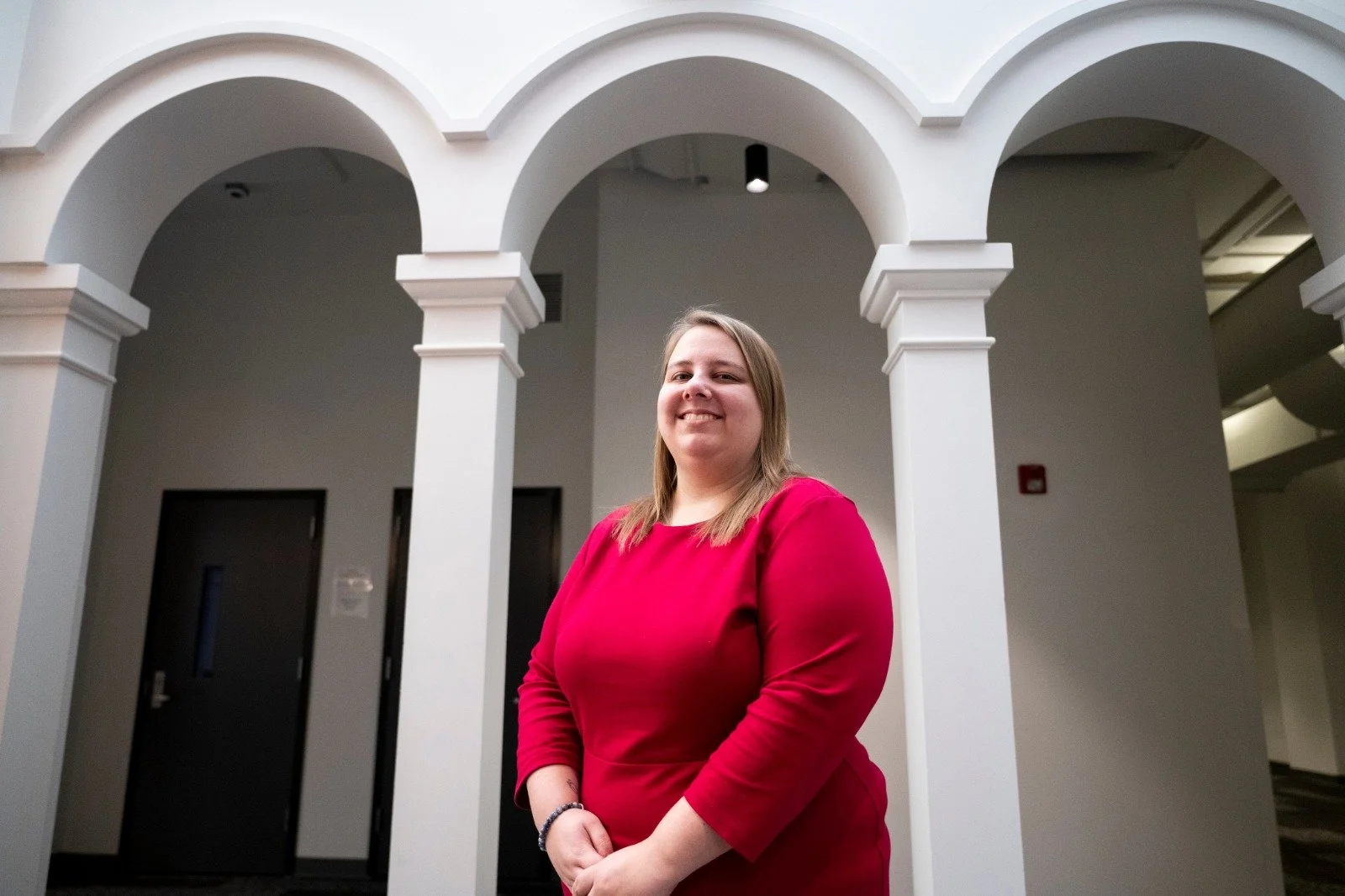
Izzie Lund is the East Pierce County reporter at The News Tribune.
Journalist responsibility increasing, despite low pay
Debbie Cockrell, 58, who has worked for McClatchy since 2004, said she has never seen the staff under so much pressure to produce more content at such a fast pace.
"The pressure's always been there to work quickly, but I feel like it's getting more so," she said. "You basically just have to be an instant expert [on everything]."
Cockrell said she's noticed a pattern at McClatchy. New hires tend to be paid more because the company can't fill the job without offering higher wages. Staff who have been there longer seem to get financially stuck and don't get enough of a raise to even match new hires, she said.
All six staff members who spoke with the Washington State News Guild and Idaho News Guild last month said they struggle to make ends meet, despite being asked to do more work than they had initially agreed to upon hire.
Hayes said the public doesn't realize some of the horrible things journalists see. He's seen dead bodies when covering crime and breaking news stories. He has sat in courtrooms, listening to the gory details of murders and sex crimes against children. He's had to build empathy and trust with victims and families whose lives have been torn apart, and then package that into a 90-second video.
"Every day it's a challenge: emotionally, technically, physically and it's rewarding," Hayes said. "We see everything, so you guys don't have to. I see terrible, horrible aspects of life and beautiful, wonderful aspects of life. And it's all part of the story that is Tacoma. And we do it because we love it, but it'd be nice to make a living wage."
How to help
Please let McClatchy executives know that employees deserve fair wages. You can support union members by filling out the email form at:
https://actionnetwork.org/letters/5191b374b67c1df91ce321de17dd1acc679998db